
About the LTVCA
The LTVCA is one of the 36 Conservation Authorities in Ontario.
It has jurisdiction over watersheds of all streams draining into the Thames River from Delaware to Lake St. Clair. The Southern boundary includes the watersheds of streams draining into Lake Erie, from the Talbot Creek watershed in the east, to the Two Creeks watershed in the west. Total area 3,275 square kilometres (1,264 square miles) and is home to 99,401 people. There are 10 member municipalities.
- Governance
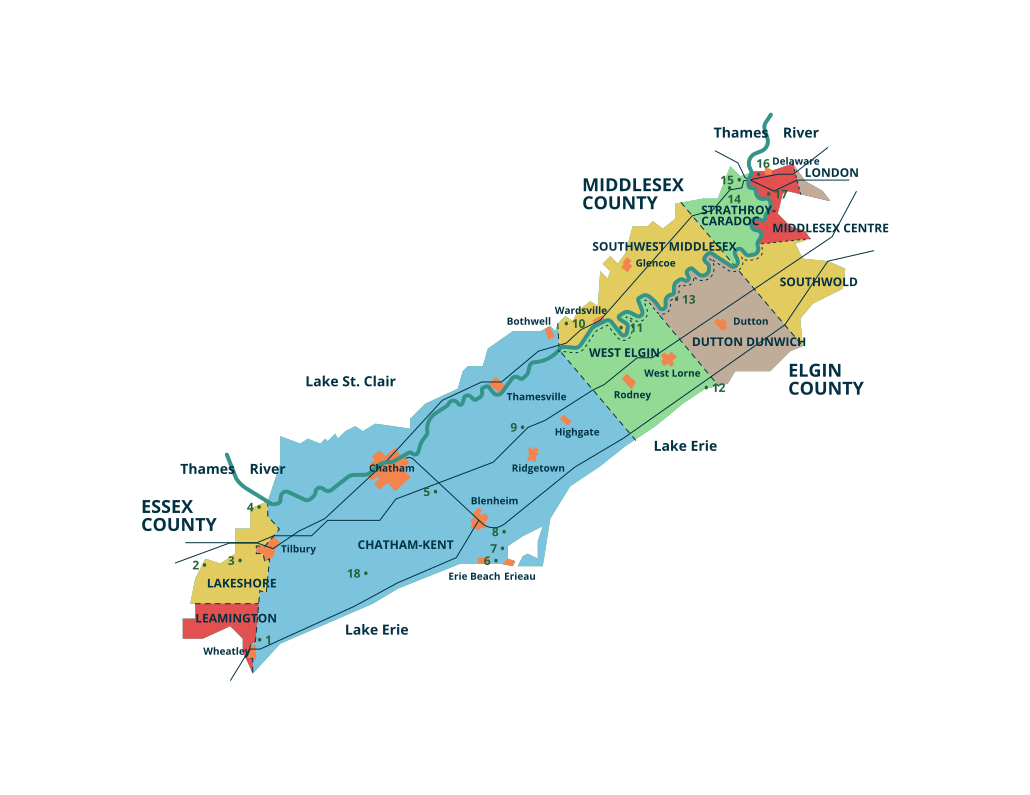
Member Municipalities
Chatham-Kent
Dutton Dunwich
Lakeshore
Leamington
London
Middlesex Centre
Southwest Middlesex
Southwold
Strathroy-Caradoc
West Elgin
Public Conservation Areas
1. Two Creeks
2. Big “O”
3. Rowsom’s Tibury West
4. Lighthouse
5. C.M. Wilson
6. McGeachy Pond
7. Rondeau Bay Marshes
8. Sinclair’s Bush
9. Walter Devereux
10. Mosa Forest
11. Big Bend
12. E.M. Warwick
13.Dutton Dunwich
14. Longwoods Road
15. Mill Stream
16. Delaware
17. Sharon Creek
18. Merlin
Member Municipalities
Chatham-Kent
Dutton Dunwich
Lakeshore
Leamington
London
Middlesex Centre
Southwest Middlesex
Southwold
Strathroy-Caradoc
West Elgin
Public Conservation Areas
1. Two Creeks
2. Big “O”
3. Rowsom’s Tibury West
4. Lighthouse
5. C.M. Wilson
6. McGeachy Pond
7. Rondeau Bay Marshes
8. Sinclair’s Bush
9. Walter Devereux
10. Mosa Forest
11. Big Bend
12. E.M. Warwick
13.Dutton Dunwich
14. Longwoods Road
15. Mill Stream
16. Delaware
17. Sharon Creek
18. Merlin
Policy and budget decisions are made by a Board comprised of 12 members appointed by our 10 municipal partners. The number of representatives appointed as Members of the Lower Thames Valley Conservation Authority Board of Directors are based on population as outlined in subsection 2(2) of the Conservation Authorities Act. One Director represents each municipality except for Chatham – Kent which has three. Directors are appointed for a maximum three-year term and can be reappointed. As appointed representatives, Directors are charged with the responsibility of establishing policies and making policy decisions which will govern the operation of the Conservation Authority. Conservation Authority staff are responsible for implementing those policies.
If these By-laws conflict with any provision of the Conservation Authorities Act, the Municipal Conflict of Interest Act, the Municipal Freedom of Information and Protection of Privacy Act or a provision of a regulation made under one of those acts, the provision of those acts or regulations prevail.
Memo on Compliance with New Governance Requirements of Bill 229
This memo describes how the LTVCA has met new requirements under Sections 14(2.2) and 14(2.3) of the Conservation Authorities Act. The Lower Thames Valley Conservation Authority has no agreements amongst participating municipalities affecting the number of members. Membership on the board is currently consistent with the population formula found under Section 2(2) of the Conservation Authorities Act. Nine of ten municipalities of the LTVCA represented on the Lower Thames Valley Conservation Authority Board of Directors have a population less than 10,000 and therefore appoint 1 (one) member. The Municipality of Chatham-Kent has between 50,000 and 100,000 people within our watershed and therefore has 3 (three) members on the board. Currently, all sitting members of our board are councillors. Additionally, a boundary adjustment is being sought between the LTVCA and the UTRCA to correctly represent drainage in the municipality. Changes to the CA Act have resulted in delays in proceeding with finalizing the boundary adjustments. These boundary adjustments will not change the municipal representation from the Municipality of Strathroy-Caradoc on the LTVCA board. It will remain consistent with the population formula with one representative.
Click the image to download full resolution pdf’s.
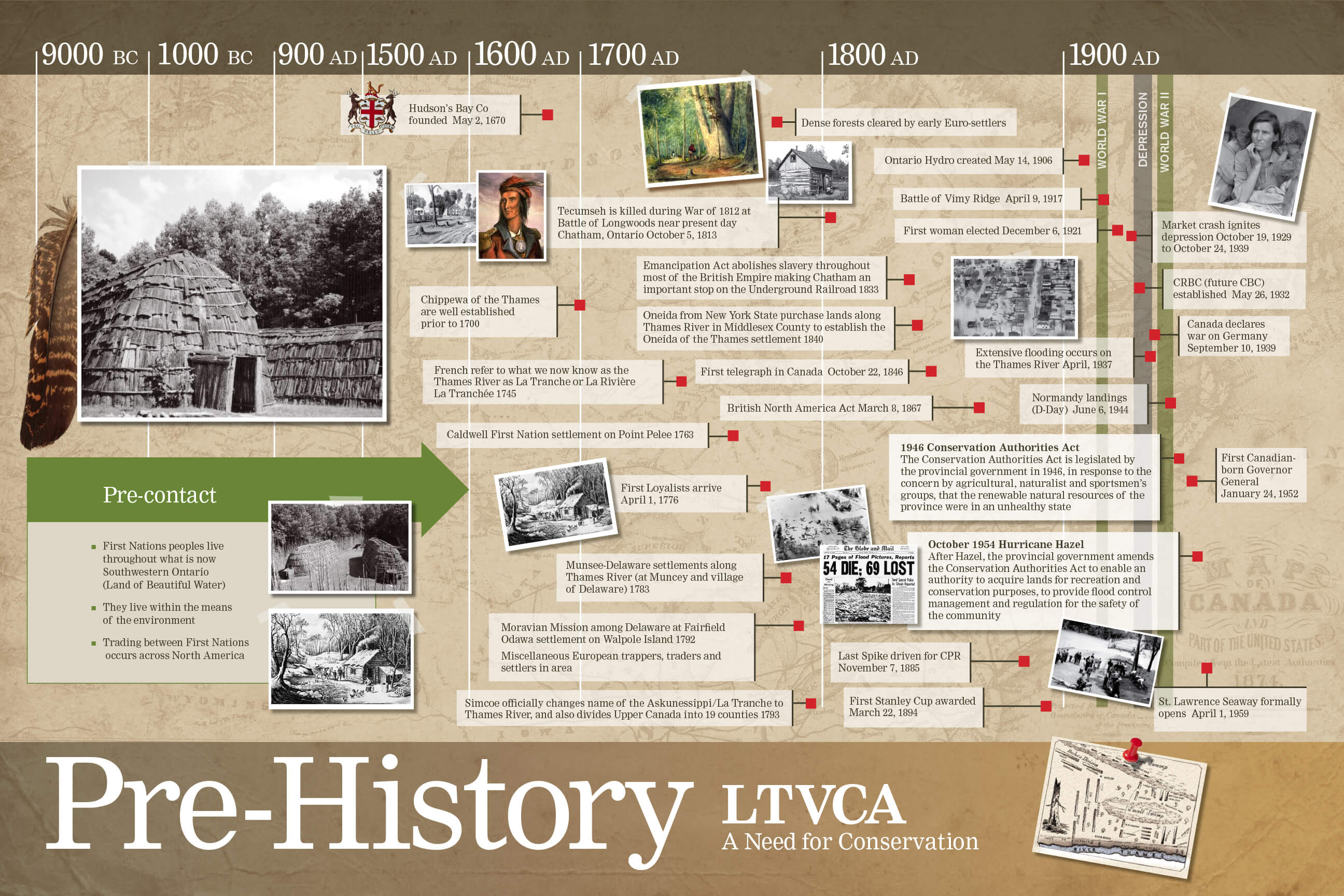
Pre-History
A Need for Conservation
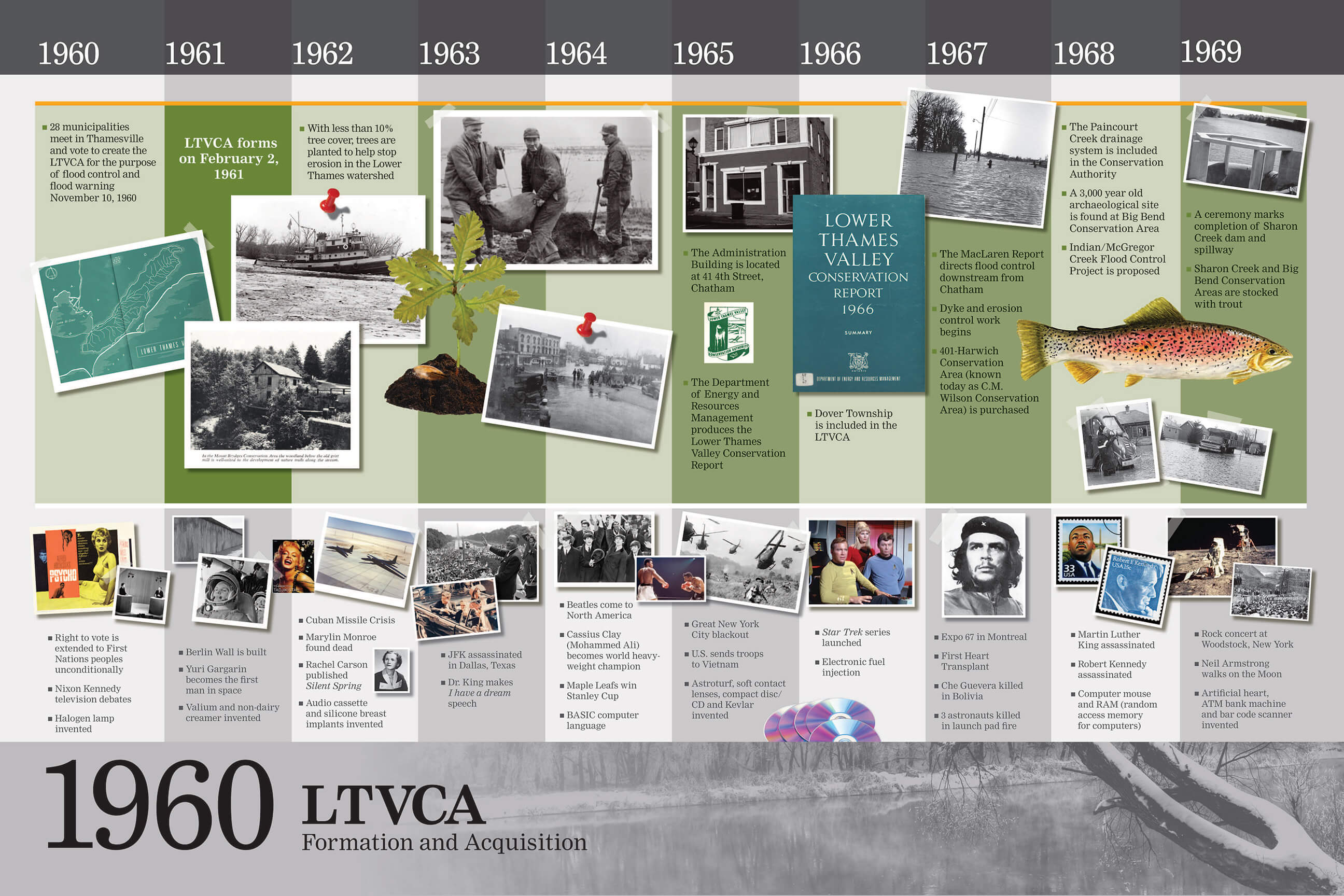
1960
Formation and Acquisition
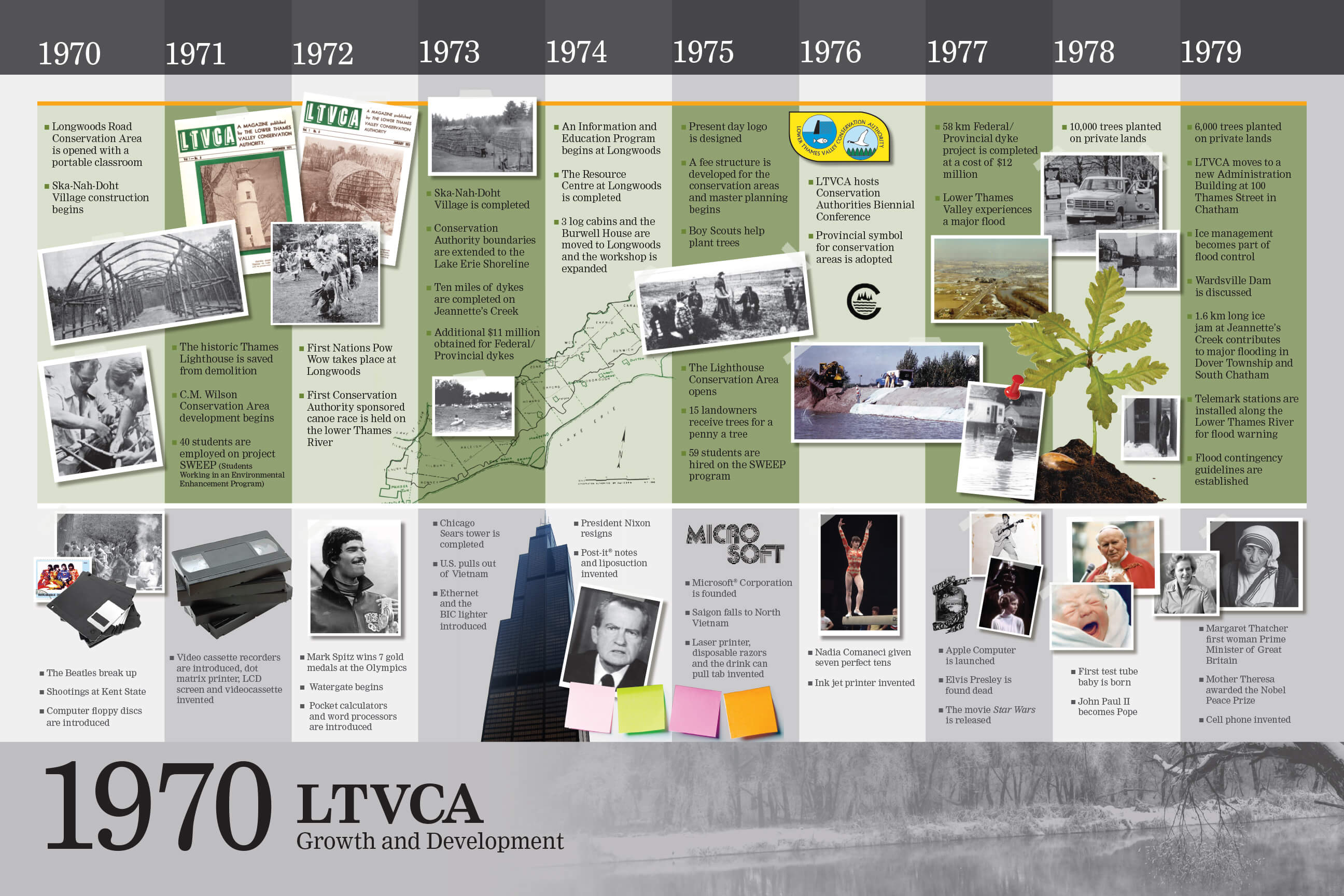
1970
Growth and Development
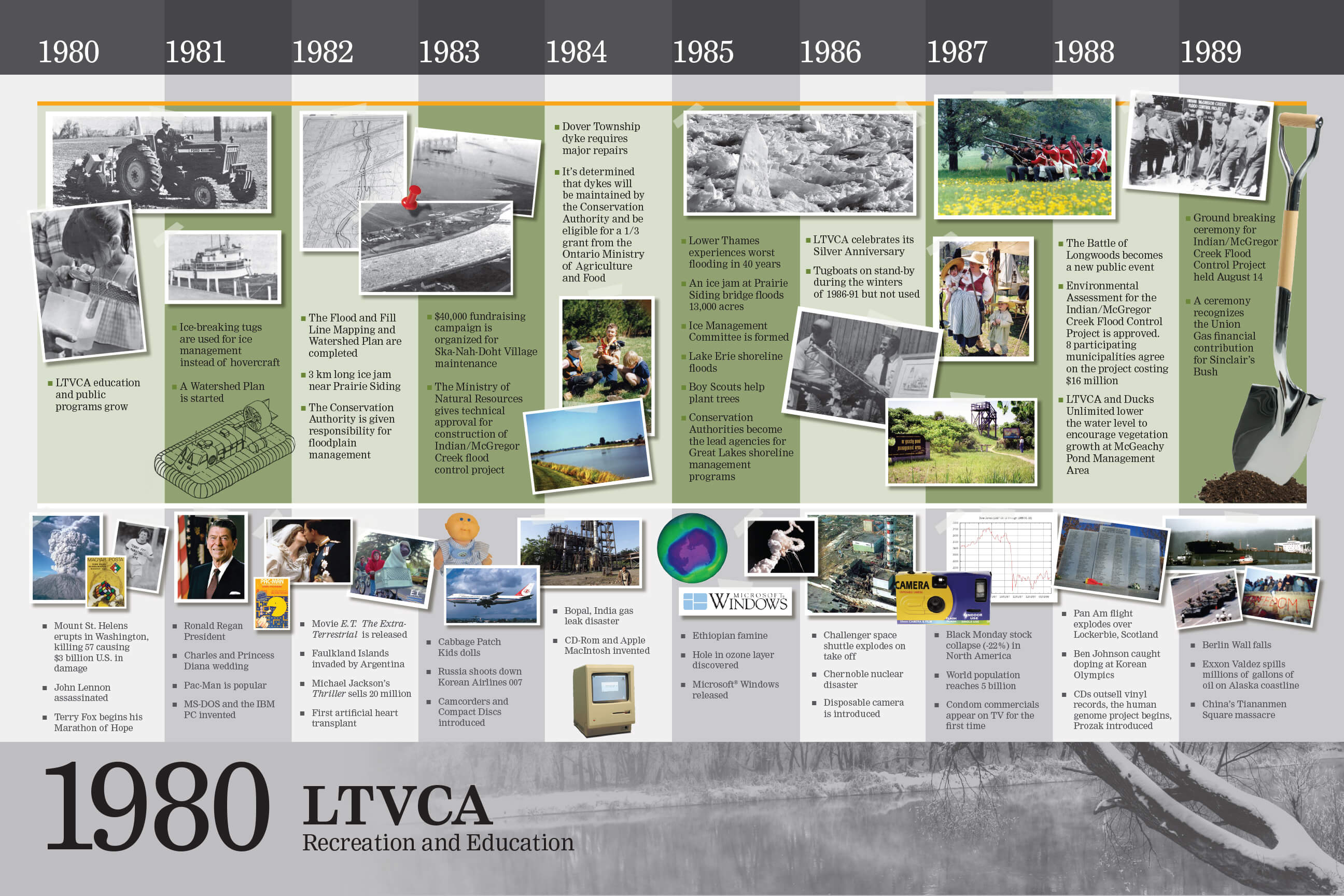
1980
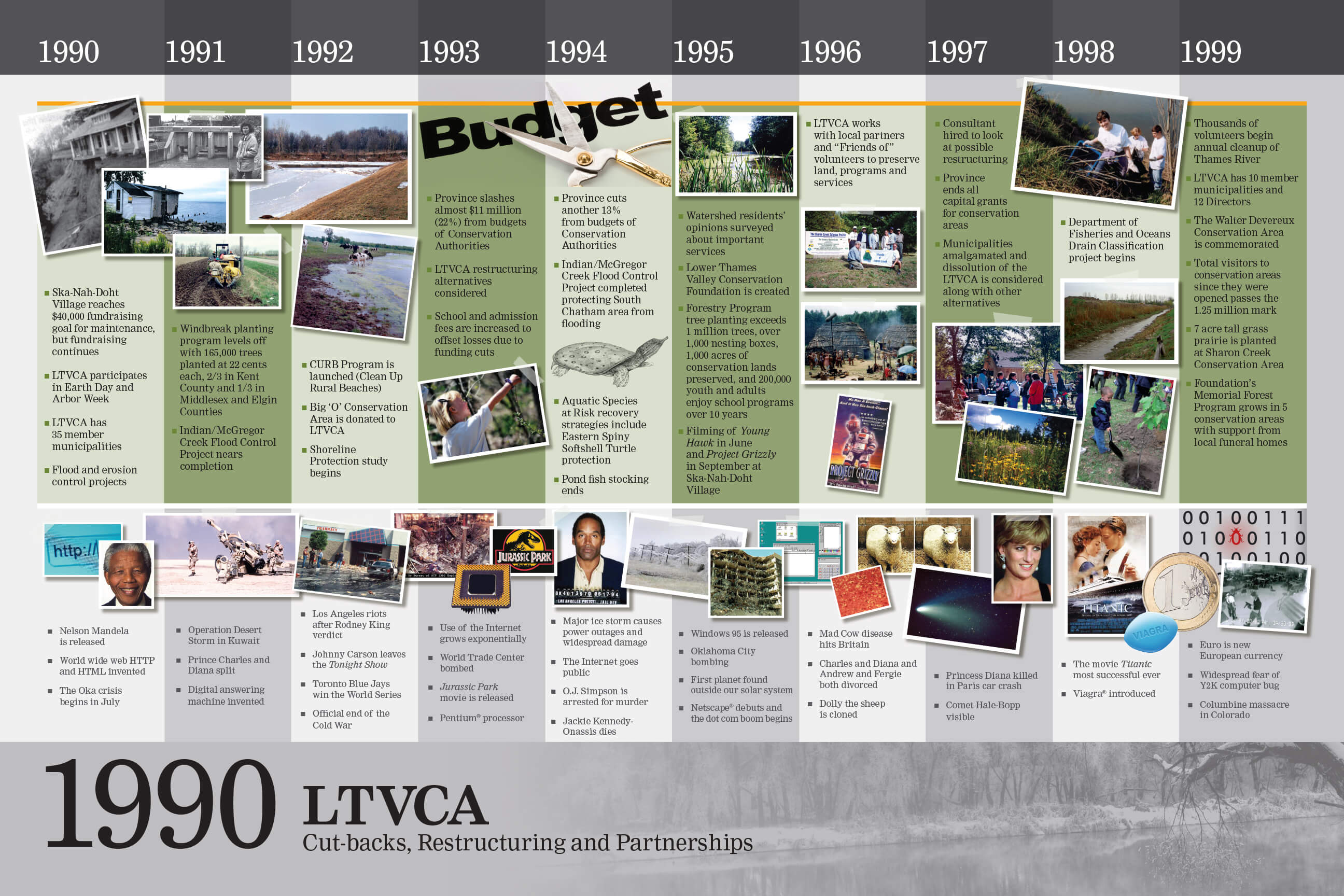
1990
Cut-backs, Restructuring and Parterships
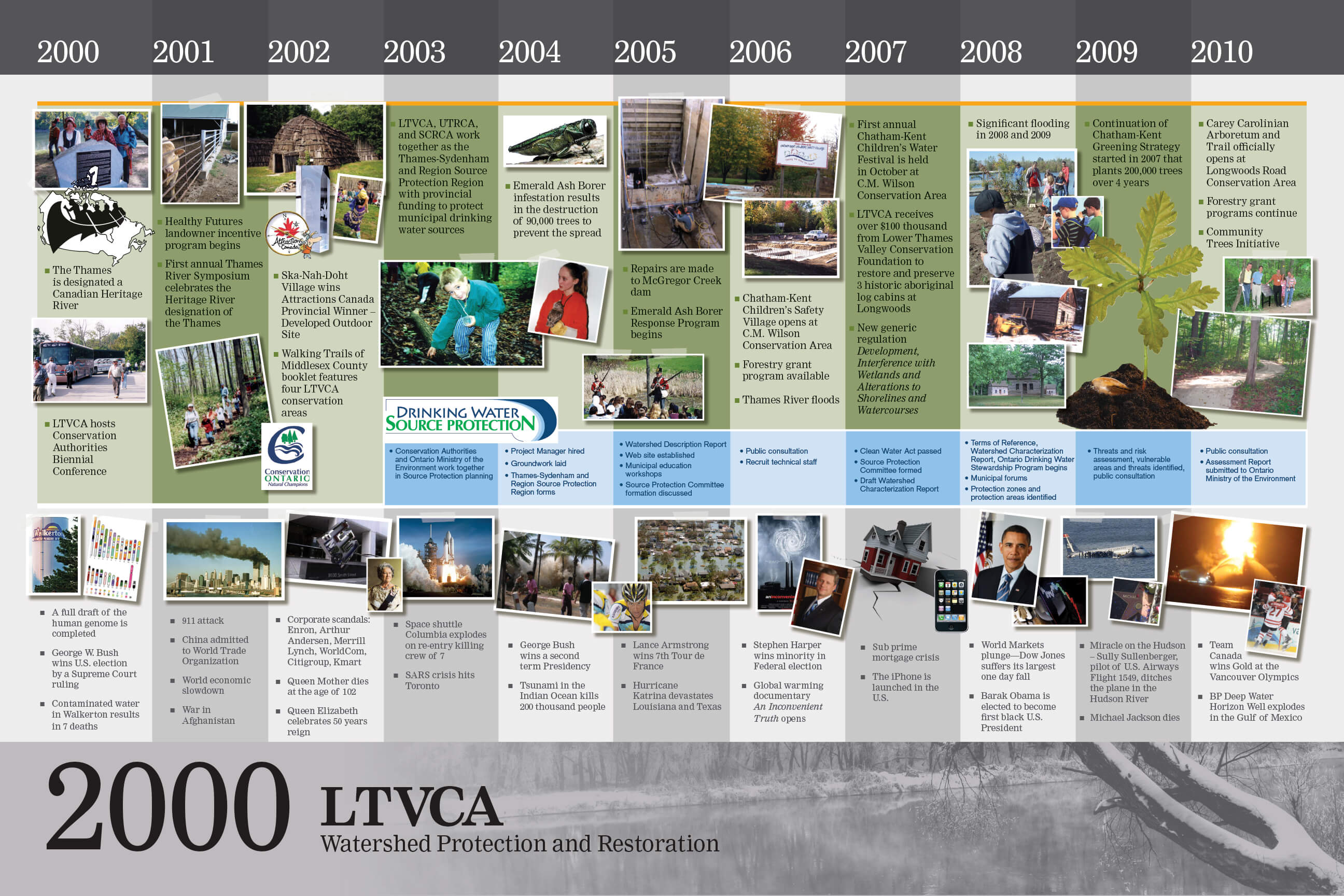
2000
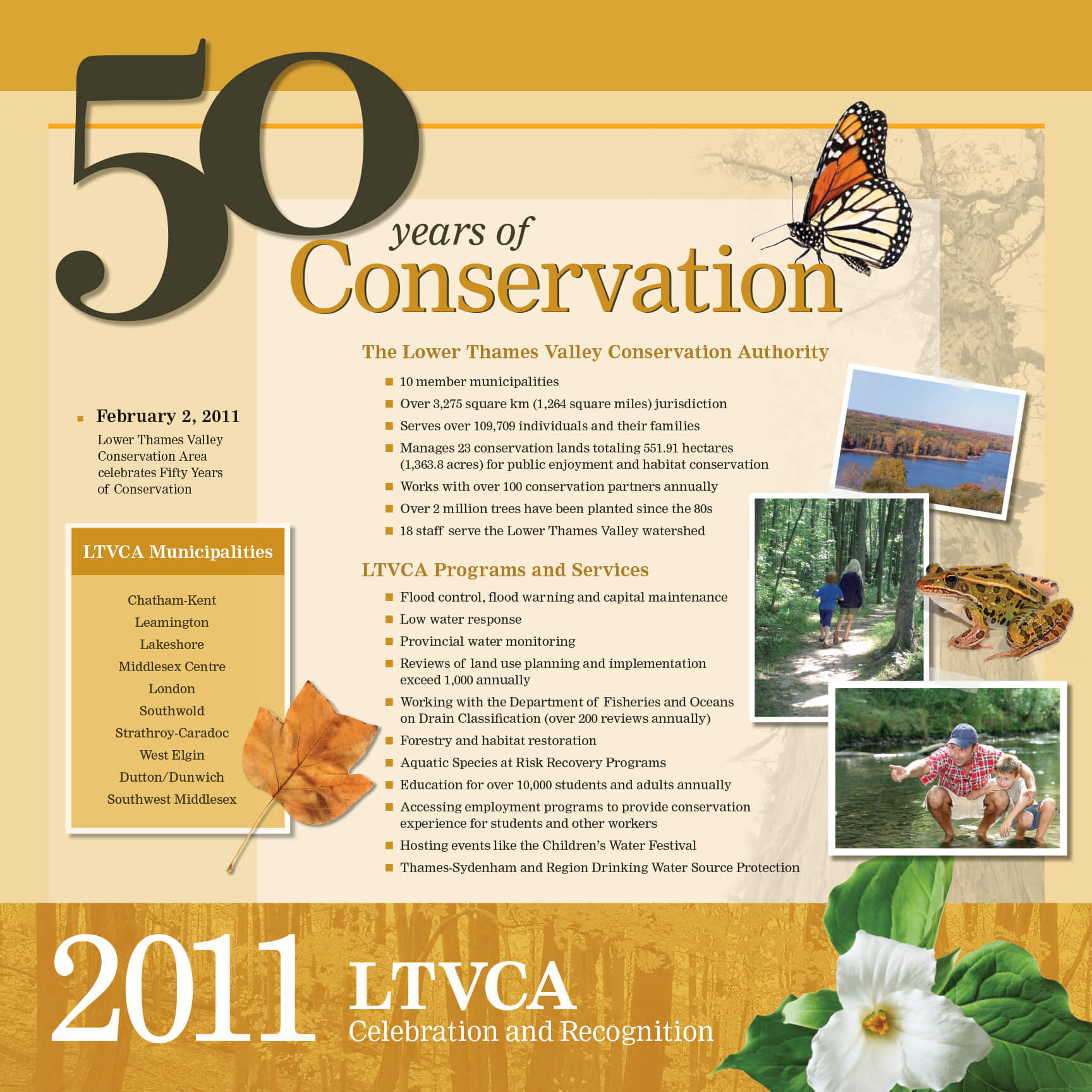
2011
LTVCA: Celebration and Recognition